Community Engagement Reporting: What Decision-Makers Actually Need to See
The strongest reports also surface tension. If residents supported the overall project but raised concerns about some impacts, say that clearly.

Finn Clark
Customer Success Manager

A community engagement report is not a scrapbook of participation activity. At its best, it is the bridge between what people told you and what decision-makers are now able to do with confidence.
“Closing the feedback loop and providing a report to both participants and decision makers is key in an engagement process.” — South Australian Department of the Premier and Cabinet, Better Together: Report
Many reports start in the wrong place. They lead with how many people visited a page, how many responses came in, and how many workshops were held. Those figures matter, but they are only the opening frame. Decision-makers need to understand whether the engagement reached the right people, whether the feedback was credible, what the strongest themes were, and what trade-offs now need to be considered.
A useful report should begin with the purpose of the engagement. What decision was being informed? What was open for influence? What was already fixed? This context helps prevent the common reporting problem where community feedback is presented as if every suggestion had equal ability to change the outcome. Clarity upfront protects the team and respects the people who participated.
The middle of the report should move from participation to evidence. This means showing the mix of channels, the groups reached, the themes that emerged, and the level of support or concern attached to those themes. Where possible, pair summary statements with source-connected examples. Decision-makers should be able to see both the pattern and the people behind it.
“Being able to report back on how stakeholder’s feedback has influenced the decision making process demonstrates democracy at work and the value of stakeholder input.” — ACT Government, Community Engagement Toolkit
The strongest reports also surface tension. If residents supported the overall project but raised concerns about construction impacts, say that clearly. If one group prioritised speed and another prioritised safety, show the trade-off. Engagement reporting becomes strategically useful when it helps leaders understand the shape of the decision, not just the popularity of options.
The final section should explain what happens next. What changed because of the engagement? What did not change, and why? What commitments are being made back to participants? Closing the loop belongs inside the reporting process, because a report that stops at findings leaves the community wondering whether their effort mattered.
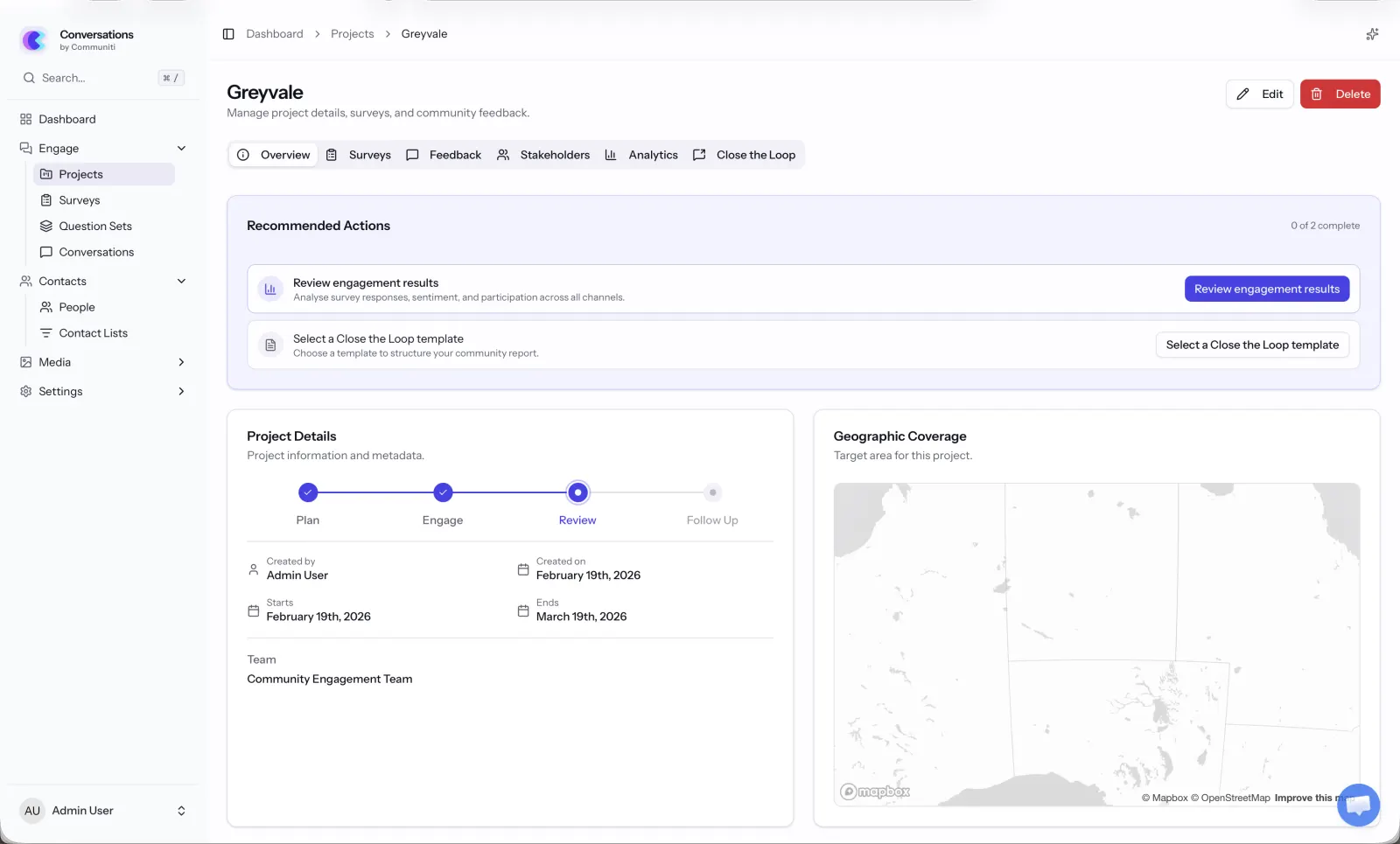
Better reporting gives decision-makers more than a summary. It gives them confidence, context, and a record they can defend. When engagement data, analysis, evidence, and follow-up sit in one connected workflow, platforms like Communiti make it easier for teams to move from a pile of feedback to a report that actually helps the next decision.