Closing a chapter: Thank you from Communiti Labs
After three remarkable years, we have made the difficult decision to wind down Communiti Labs.

Dan Ferguson
Co-founder and CEO
In this article To the people who made Communiti Labs possible
This is not the ending we imagined when we began.
It is, however, a decision I believe is necessary; because of personal circumstances and my health, because we have not been able to establish the sustainable commercial footing the company needs, and because continuing without the capacity to properly serve the mission would not be right.
There is a great deal I want to say about what we built, what we learned and why we have reached this point.
But the first and most important thing I want to say is:
Thank you.
To the people who made Communiti Labs possible
First, to my co-founder, Steven.
Steven is one of the most passionate, intelligent, driven and dedicated people I have ever had the privilege of working alongside. He worked tirelessly with me in pursuit of our shared vision: empowering community engagement professionals to spend more time doing what they do best, at a time when our communities sorely need more champions of meaningful participation.
Founding a company asks a great deal of a person. It requires optimism when optimism feels irrational, resilience when the path ahead is unclear, and an extraordinary willingness to keep showing up, staying resilient through the storms and an unwavering belief that we're going to make it through whatever storm comes next.
Steven brought all of that and more.
Communiti Labs would never have existed without him.
To Finn, Jarryd, Laura and Becky: thank you.
You achieved so much with so little. You worked alongside me day in and day out, navigating changing priorities, difficult technical problems, constrained resources and the inevitable uncertainty that comes with building something new.
The care, ingenuity and determination you brought to your work made an enormous difference. Without you, we could not have achieved even a fraction of what we did.
The outcome of the company should never be mistaken for a reflection of the quality, commitment or capability of the people who built it. I am enormously proud of this team, and I hope everyone who worked with Communiti Labs carries that pride with them into whatever comes next.
To the people at Antler, our investors, advisers and backers: thank you for making the mission possible.
Without your belief, we would never have been able to break ground. You gave us the resources, support and confidence to pursue an ambitious idea in an industry where change is rarely easy or fast.
You backed not only a company, but a belief that community voices could be heard, understood and acted upon more effectively.
To our customers and pilot partners: thank you for trusting us with work that mattered.
You allowed us into your organisations, shared the realities of your workflows and trusted us with the contributions of your communities. Many of you advocated for us internally, navigated procurement processes and took a professional and political risk on a young company.
You gave us honest feedback when something did not work, encouragement when it did, and opportunities to prove what the technology could become.
We never took that trust, or the responsibility that came with it, for granted.
To the champions across the community engagement industry who supported us from the beginning: thank you for your time, resources, introductions, feedback and encouragement.
Thank you especially to those who took a chance on a small and largely unknown startup attempting something that few others were trying to do.
I have deliberately not attempted to name every person who contributed to this journey. There are simply too many, and I would be heartbroken to overlook someone.
Please do not mistake the absence of your name for an absence of gratitude.
Whether you gave us 20 minutes for an early research interview, participated in our 'frank and fearless' feedback session, challenged one of our assumptions, introduced us to someone, helped us sponsor an event, invited us to speak, tested an unfinished product, tolerated a bug, advocated for us internally or gave us the opportunity to work alongside your organisation: you helped make Communiti Labs what it became. For that, I am eternally grateful.
The question that started it all
When Steven and I began this journey, we were in the throes of Antler's residency program. Steve came to me after I had pitched another idea I was working on at the time, and said "I like the way you think, I want to work with you on an idea I've had, and I've been accepted into LaunchVic's accelerator. I've told them I have a technical cofounder, will you come and be that cofounder?" Immediately, I knew I wanted to work with Steve, as that's exactly what I would have done.
We set out to explore a deceptively simple question:
How might we help Victorians better engage with community and natural spaces?
At the time, we didn't have an answer.
My experience founding the Helping Group, and working alongside community organisations and volunteering gave me some direction. Steven brought his close ties with local government and experience with past civic initiatives. But neither of us began with a predetermined product or a perfectly formed vision.
So we started calling people.
We cold-called and cold-emailed around 100 strangers, often pleading for just 20 minutes of their time. We asked each of them two questions:
What do you love about your job?
What stops you from doing what you love?
Across those conversations, we identified roughly 13 recurring challenges. But there was one thread connecting almost every person we spoke with.
They had too much data and not enough time, resources or specialised skills to meaningfully bring it all together.
What we found were people people.
These were professionals who loved their work. They loved advocating for their communities, bringing people together and helping organisations make better decisions. They cared deeply about doing engagement well.
But the better they engaged, the more work they created for themselves on the back end.
Community engagement does not arrive neatly inside a single spreadsheet or online portal. It arrives through workshops, handwritten notes, sticky notes, emails, meetings, interviews, photographs, voice recordings, surveys, submissions and conversations.
Bringing all of that together is extraordinarily difficult.
When teams are stretched for time and resources, contributions can be missed, context can be lost and some voices may never make it into the final analysis.
We set ourselves a deliberately ambitious goal:
To help ensure that no community voice was ever lost again.
Building Communiti Analysis
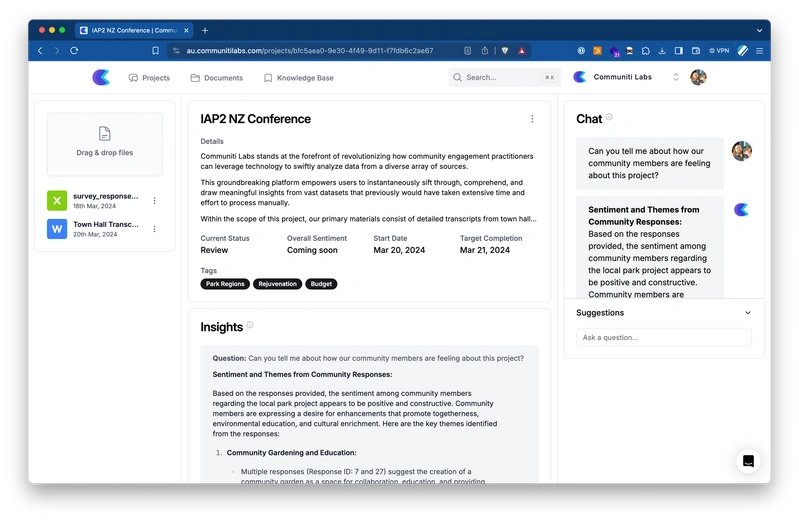
Throughout 2024, we worked closely with a small group of extraordinary organisations that gave us their time and co-designed the product alongside us.
They experienced the rough edges.
They put up with errors, changing interfaces, incomplete features and assumptions that turned out to be wrong. They allowed us to observe their work, understand the complexity behind it and learn from real projects rather than imagined use cases.
Most importantly, they gave us honest feedback.
They stayed with us because they shared our belief that the industry could move forward.
After 12 months of co-design, we had built something meaningful.
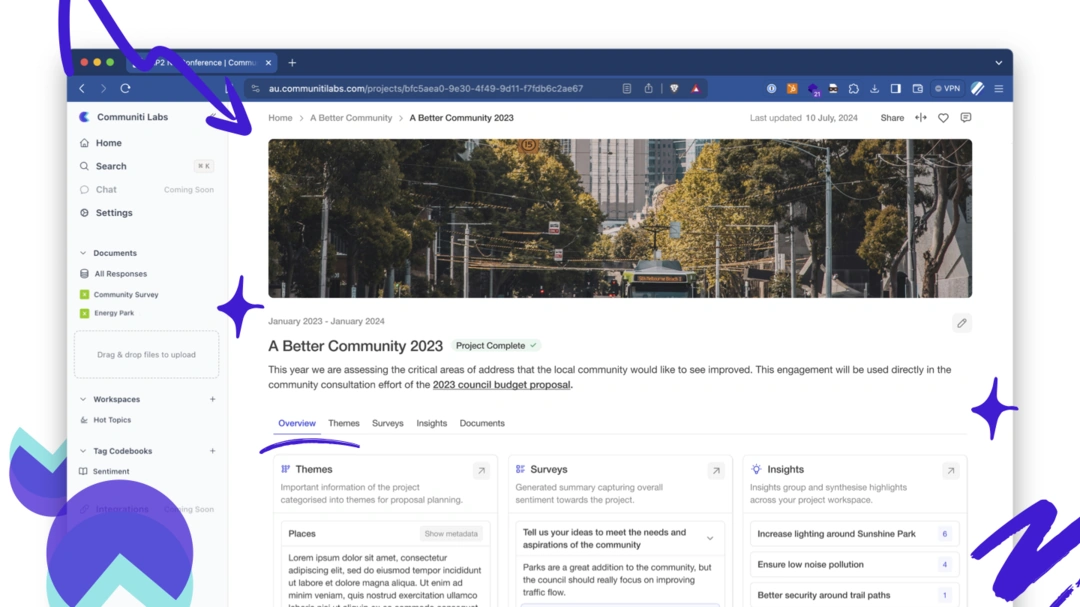
In 2025, we took that solution to market as Communiti Analysis.
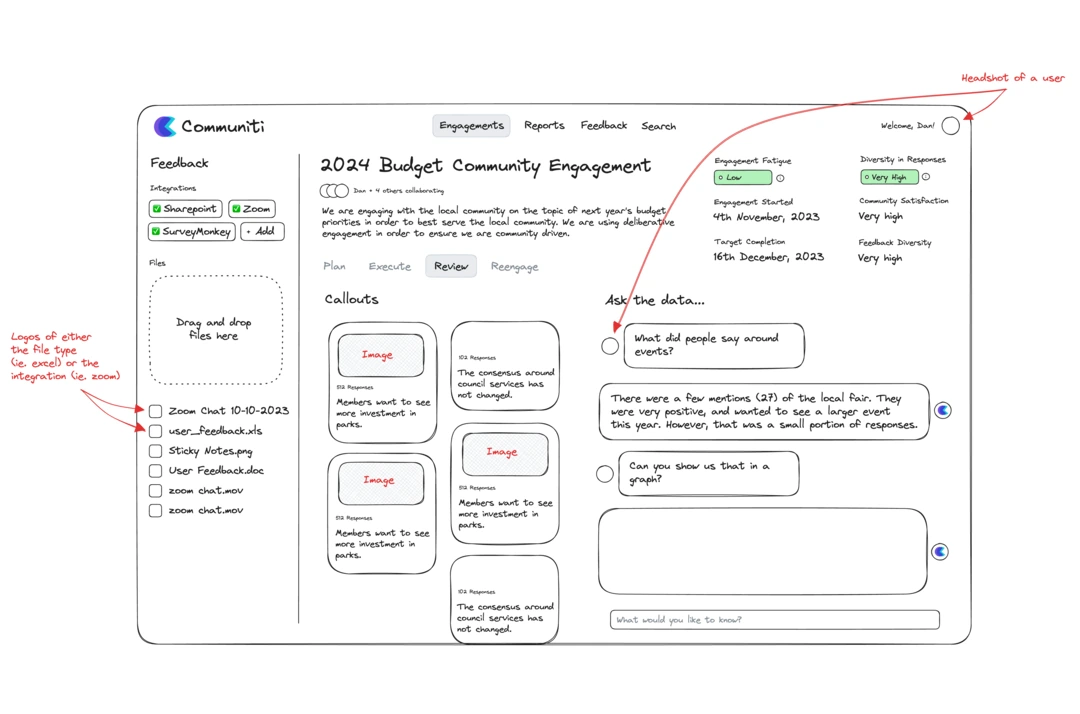
Communiti Analysis was built to bring fragmented community feedback into one shared workspace. Teams could combine surveys, spreadsheets, documents, written submissions, transcripts, recordings, images and feedback collected through in-person activities, rather than treating every channel as a separate analysis project.
The aim was not merely to summarise what people had said.
The platform helped practitioners identify themes, topics, sentiment, arguments and supporting evidence; interrogate the relationships within their data; and develop reports that could be traced all the way back to the original community contributions.
Work that might previously have required days or weeks of manual coding, categorisation and synthesis could, in some cases, be brought down to minutes.
In 2025, Communiti Analysis helped process and analyse more than 2.5 million community contributions.
We estimate that it saved our customers almost 5,000 hours of work and generated an estimated return on investment of nearly 3,200%, based on the manual work avoided and the time returned to engagement teams.
2025 in review
What we built together
A year measured in voices heard, time returned and the trust our customers placed in us.
Image 1 of 8
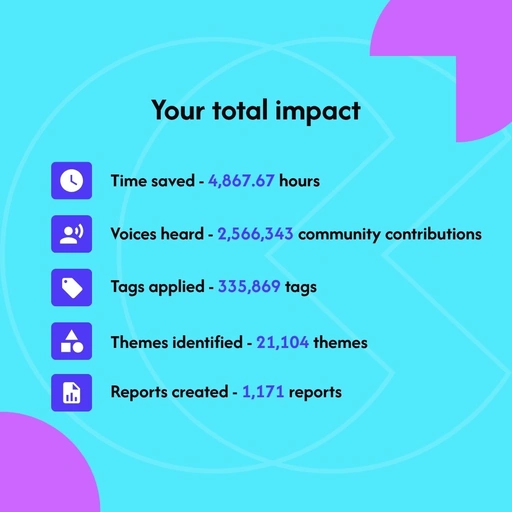
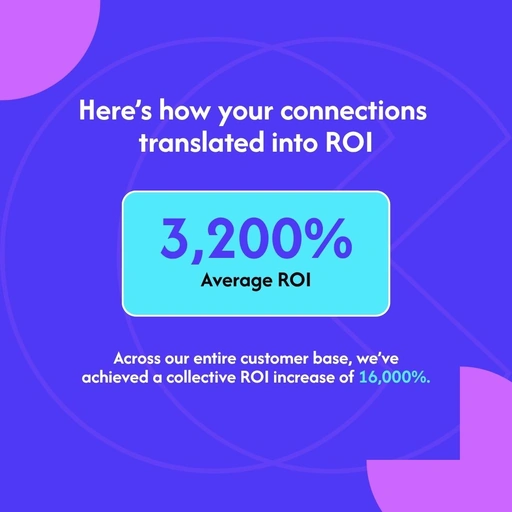
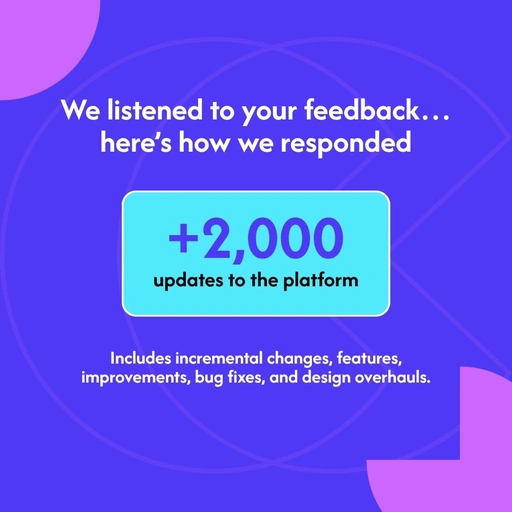
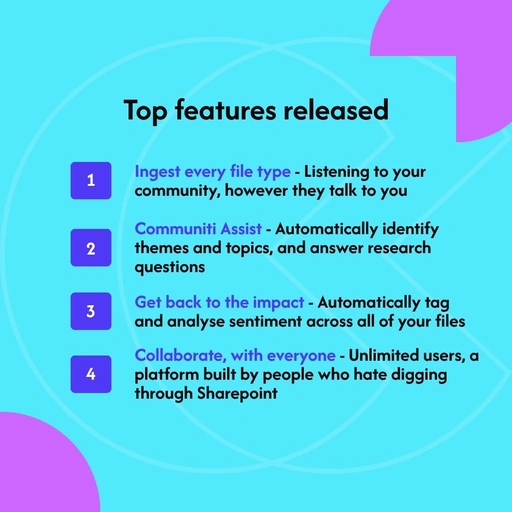
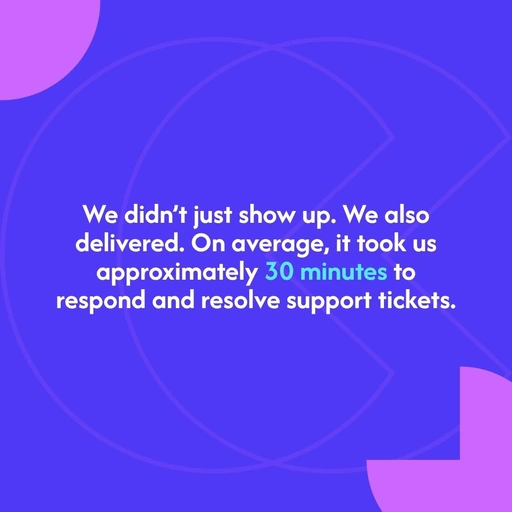
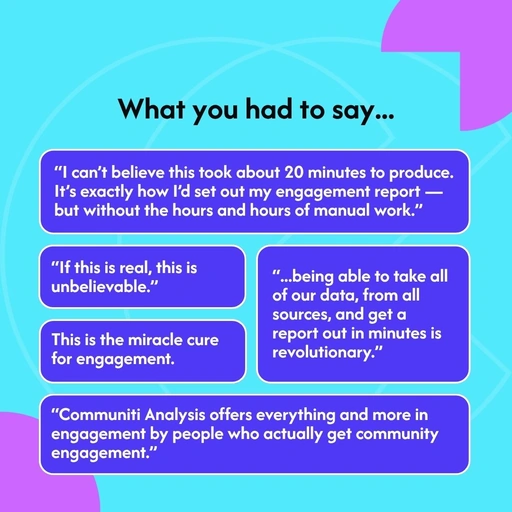
Those figures are something our entire team should be proud of.
But behind every number was a person trying to explain how a decision might affect their street, their family, their business, their environment or their future.
Our responsibility was not simply to process those contributions faster. It was to preserve their meaning and make it possible for engagement teams to understand them without sacrificing trust.
One of the principles that guided us was:
It is never good enough to say, “The platform told me so.”
Every insight needed to be auditable.
Every answer needed to be traceable.
Every theme, topic and report needed to connect back to the individual, verbatim community contributions from which it had been derived.
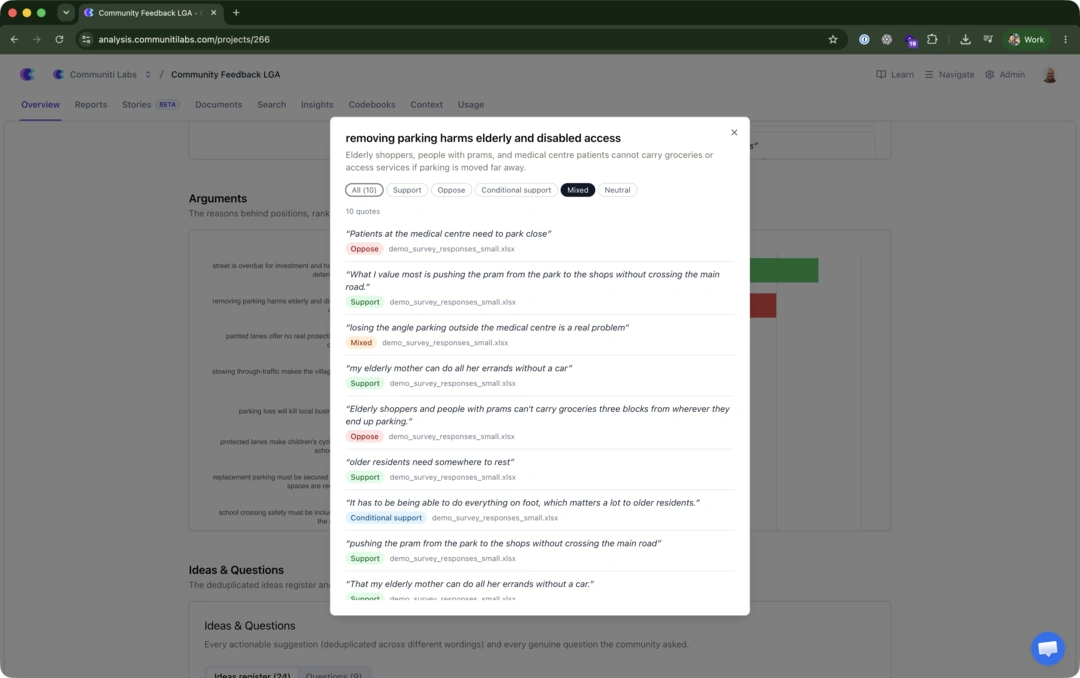
The technology was intended to support practitioners’ judgement, not replace it. The goal was to remove administrative burden while leaving the responsibility for interpretation and decision-making where it belonged: with the people doing the work.
Building that level of auditability and trustworthiness was one of the greatest technical challenges of my career.
It was also one of the most rewarding.
We built at the convergence of rapidly developing large language models, traditional machine-learning techniques, qualitative and quantitative research methods, and an enormous variety of data formats and qualities.
We explored ways to identify implied issues, separate a person’s position from the tone in which it was expressed, understand the reasons behind support or opposition, recognise patterns across thousands of contributions and preserve the evidence behind every conclusion.
Our goal was never to add an AI chatbot to an existing workflow.
It was to create a unified analytics engine capable of producing timely and accurate signals while allowing every conclusion to be examined, questioned and verified.
It was an incredible challenge. And an enormous amount of fun.
Looking beyond the online portal
Our research eventually led us to an even broader question:
What would community engagement look like if technology supported the entire process, not only the survey or the analysis at the end?
That question became Communiti Conversations.
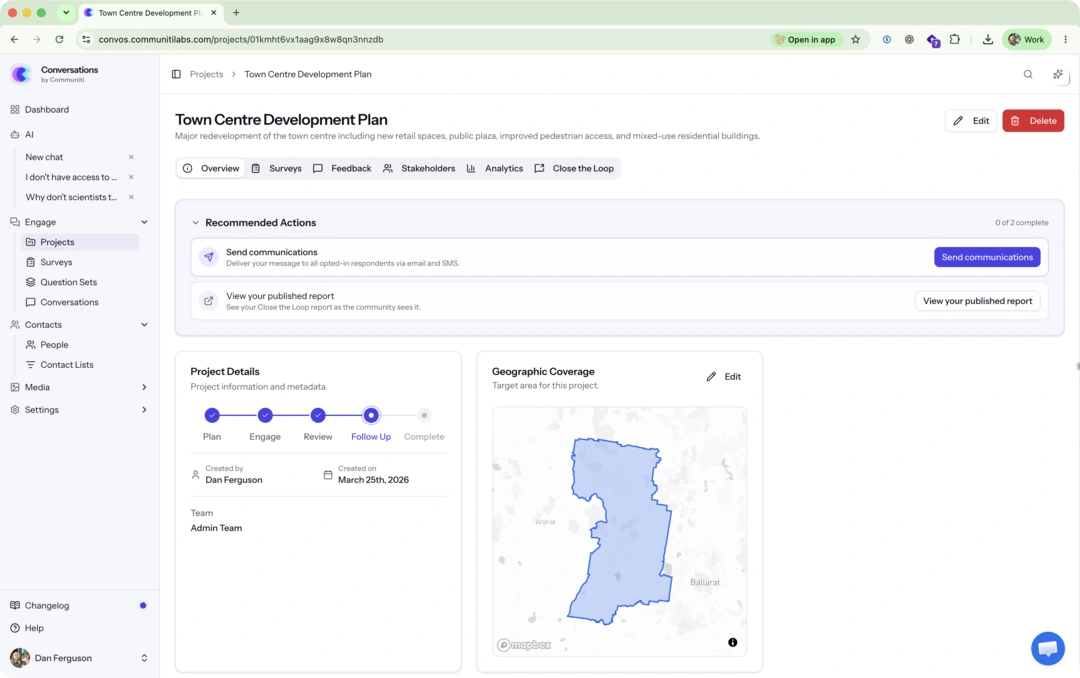
The work behind Conversations required our team to look beyond the most obvious answers and critically examine the landscape created by the industry’s incumbents.
We reviewed emerging research from academia, public participation practitioners and deliberative democracy. We asked how technology might help organisations not simply conduct more engagement, but achieve better democratic and deliberative outcomes.
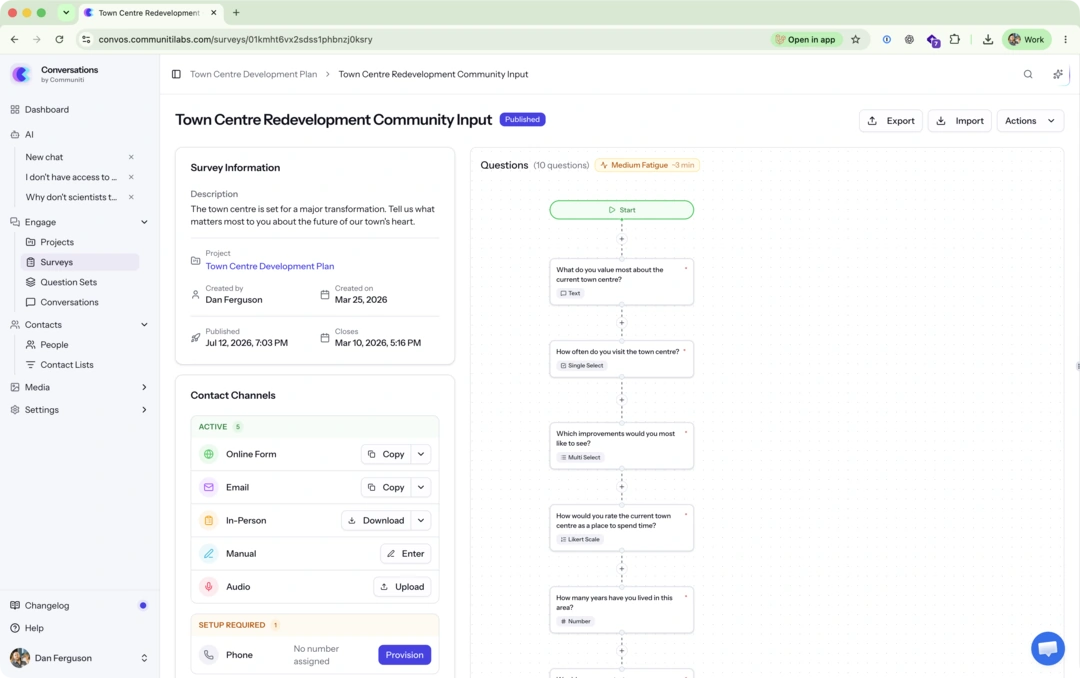
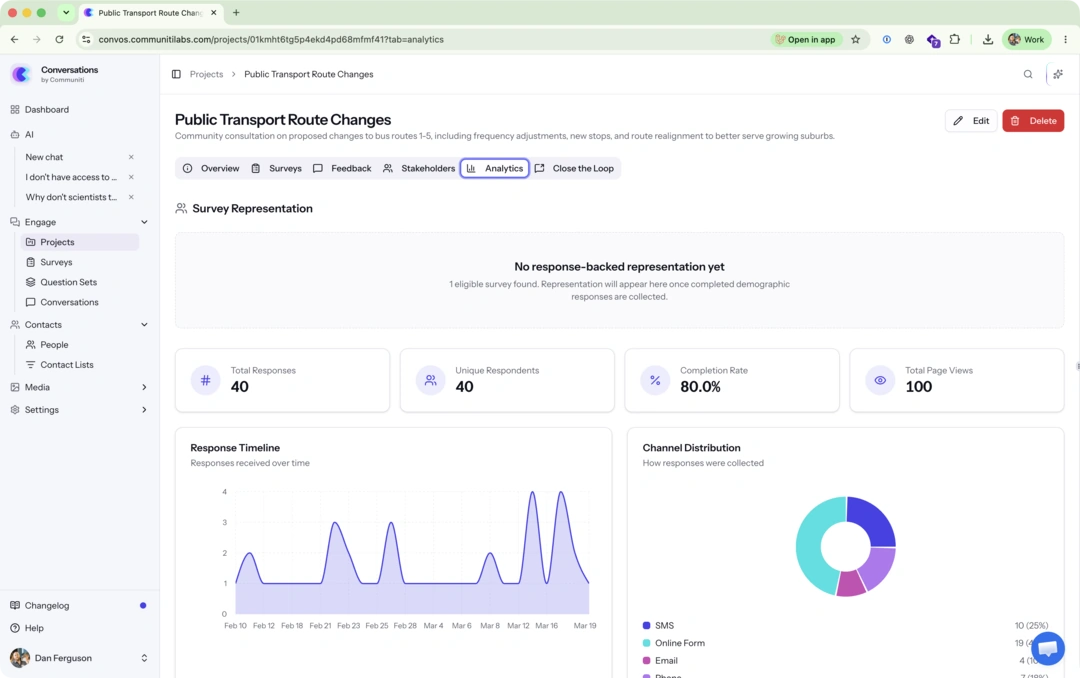
We began building an end-to-end engagement operating system through which teams and departments could plan together, engage across multiple channels, review participation consistently, hand feedback into analysis and close the loop with their communities.
Planning should not have to live in one document while surveys live in another system, stakeholder records sit inside spreadsheets and inboxes, offline feedback waits to be manually entered, and follow-up becomes a last-minute scramble.
We believed those activities should form one connected and accountable workflow.
Central to that vision was another simple belief:
Communities should not have to come to our platforms. We should be prepared to meet communities where they already are.
An online portal can be valuable, but it should be one pathway among many.
People should be able to participate through web forms, SMS, email, voice, uploads, in-person activities and the other channels they already use. Feedback gathered offline should not become less valuable simply because it is more difficult to capture.
One connected workflow
Plan, participate and understand
Conversations looked beyond the online portal to support the whole engagement process.
Image 1 of 2
Wherever possible, community members should also be afforded the opportunity to engage in the language in which they think, not merely the language in which a platform happens to have been built.
Communiti Conversations was designed to make multilingual participation part of the complete workflow, rather than treating translation as a separate and inconsistent task.
It was also designed to make closing the loop a default step.
When someone gives their time and shares their experiences, they deserve to know what was heard, what changed, what did not change and why.
Without that follow-up, engagement risks becoming extractive. Communities are asked to contribute, but they are left uncertain about whether anything happened as a result.
We were not able to give Communiti Conversations the time it deserved.
Nevertheless, its early traction, our first pilots and the reactions of the practitioners who saw it strengthened my belief that its central thesis was right.
The future of public participation should not be limited to building better online portals.
It should be about building inclusive engagement systems that connect planning, participation, analysis, decision-making and accountability—across every appropriate channel and, wherever possible, in every language.
I hope the wider industry will continue exploring that thesis and incorporate it into the platforms and practices that come next.
Why we are closing
There are several truths behind this decision.
There is a personal truth.
My health has required me to reconsider what I can sustainably continue to give to Communiti Labs and what continuing down this path would ask of me and the people around me. You'd be surprised just how much of yourself you need to throw at the wall to lead a startup. I certainly was.
There is also a commercial truth.
Although we built products we are proud of, delivered meaningful outcomes and saw encouraging signals around our broader vision, Communiti Labs did not establish a repeatable and sustainable path to market quickly enough.
There is failure in that, and I do not want to disguise it.
As founder and CEO, the final responsibility is mine.
There are things I wish I had done differently.
I wish I had validated parts of the market more rigorously and earlier. I wish I had better understood the gap between enthusiasm for our mission and the conditions required for organisations to purchase, adopt and champion a new category of technology.
At times, we could have narrowed our focus sooner, been more disciplined in our go-to-market approach and recognised earlier what the market was, and was not, ready to sustain.
Perhaps the timing was not right.
Perhaps the structure of the market made adoption harder than we anticipated.
Our execution fell short in ways that only become obvious with hindsight.
Most likely, all of those things are true to some degree.
A meaningful mission and a strong product are not, on their own, enough to create a sustainable company. We were not able to build that sustainability within the time and resources available to us.
That is painful to acknowledge, but it is important to be honest about it.
It also does not erase what the team achieved, the value our customers received or the importance of the problem we set out to solve.
I am immensely proud of the people we brought together.
I am proud of the products we built.
I am proud of the organisations we supported and the millions of community contributions we helped make sense of.
And I believe in the necessity of the mission more strongly now than I did when we began.
What happens now
By the time this announcement is published, we will already have spoken directly with every organisation that has an operational relationship with Communiti Labs.
Our affected customers are being refunded, and access, data exports and other transition requirements are being handled individually and privately with each organisation.
We have also contacted the organisations with which we were actively discussing pilots, contracts or future work.
This announcement is therefore not intended to be the first notification for anyone directly affected by the wind-down. It is a broader notice to the industry and to the many people who have followed, supported and contributed to our journey.
Although Communiti Labs is winding down, the future of the products and technology is not yet settled.
We are currently speaking with several people in and around the industry about whether the work might continue in another form. That could involve parts of the technology, the products or the underlying mission being carried forward by someone with the capacity and resources to give them the future they deserve.
There is nothing definitive to announce today, and I do not want to create expectations before there is certainty.
But I am hopeful that this work will not simply disappear.
If a responsible path can be found that allows someone to continue serving the industry and pursuing the mission we started, we would be proud to see it carried forward.
What I hope comes next
There are more startups entering government technology and community engagement today than when we started. I find that enormously encouraging.
I hope this innovation produces not simply more features or more efficient consultations, but better democratic outcomes.
I hope we can build a world that moves closer together by finding common ground and listening to understand, not merely listening long enough to react or respond.
I hope organisations involve community engagement professionals earlier in planning and decision-making.
Too often, engagement teams are brought in after the most consequential decisions have already been shaped. They are then asked to absorb the heat of community frustration surrounding choices they did not make and processes they did not design.
They are handed the impossible task of listening to the concerns of communities while carrying responsibility for decisions that were never theirs.
They deserve better.
I also hope that those of us who build technology for this industry remember the privilege involved.
Our customers are not simply accounts, contracts or users. They are partners undertaking difficult and consequential work on behalf of their communities.
When we support them well, we are indirectly supporting every person who has taken the time to participate in a public decision.
That responsibility should shape the technology we build and the way we conduct ourselves.
I look forward to seeing where the industry’s innovation goes next. I hope others build upon the hypotheses we explored, learn from the mistakes we made and continue pursuing the opportunities we were unable to complete.
A final request: be willing to take the risk
There is one final request I would make of everyone working in government, community engagement and the broader civic technology ecosystem:
Please be more fearless.
Keep taking meetings with founders.
Keep sharing the problems you encounter.
Keep challenging new ideas, offering your experience and helping people understand the realities of the industry.
One of the most encouraging parts of our journey was discovering how willing people were to give us their time. So many people agreed to a meeting, shared their experiences and helped us understand the work.
Those conversations mattered enormously.
But conversation alone cannot create change.
Almost every founder I have met in the government technology space is there because they genuinely care about the work. They want better outcomes for communities. They want to work alongside the extraordinary people serving them. They can see the possibility of a brighter future and are willing to put an enormous amount on the line to help bring it into existence.
Starting a company is frightening.
Founders step beyond the safety of established systems, often investing their savings, health, reputations and years of their lives into something that may never work.
They do it because they believe the possibility of making a meaningful difference is worth the risk.
I have heard many people say they want the industry to improve.
They want better technology, more responsive vendors, greater accessibility, deeper participation and new approaches to longstanding problems.
Yet there can be a gap between wanting change and acting in a way that enables change to occur.
The status quo is not inherently wrong.
Established providers, processes and procurement practices exist for legitimate reasons. Public money must be managed carefully. Community data must be protected. Organisational and political risks must be taken seriously.
Being fearless does not mean being careless.
It means recognising that repeatedly choosing only what is familiar carries risks of its own: missed opportunities, persistent inefficiencies and another generation of technology designed around yesterday’s assumptions.
Meaningful change requires people who are prepared to advocate internally, run a pilot, create a pathway through procurement or allocate part of a budget to testing a new approach.
It requires people who are willing to vote with their feet.
Vote with your attention.
Vote with your advocacy.
Vote with your procurement decisions, partnerships and budgets.
Not every startup will succeed. Not every product will fulfil its promise, and not every experiment will produce the outcome you hoped for.
But your support can make an extraordinary difference.
A pilot can give a young company the evidence it needs to improve.
A first contract can allow a founder to hire another person.
A case study can create the credibility required to enter the next organisation.
An internal champion can be the difference between a worthwhile idea disappearing and becoming something capable of serving an entire industry.
This is not an attempt to suggest that anyone owed Communiti Labs a contract, or that the industry is responsible for our outcome.
It is not.
The responsibility for creating a sustainable company was ours, and ultimately mine.
It is instead a request for the future.
Please keep making time for the people trying to build what comes next.
Challenge them. Hold them to high standards. Expect transparency, accountability and care.
But when they earn your belief, be prepared to support that belief with action.
The future will not become better simply because we agree that it should.
We have to be willing to choose it.
Thank you
It has been an absolute honour to be at the helm of Communiti Labs and to undertake this journey surrounded by so many remarkable people.
To everyone who gave us their time, trust, patience, criticism, encouragement, expertise, connections or care: thank you.
To those who backed an unknown startup, advocated for us inside their organisation or took a chance on unfinished technology because they believed in what it could become: thank you.
To those who allowed us to listen, learn and participate in this industry: thank you.
Thank you for your time.
Thank you for your efforts.
Thank you for your attention.
And, most of all, thank you for your care.
Communiti Labs may be closing, but the need that brought us into existence remains.
Community voices still deserve to be heard, understood and reflected in the decisions that shape people’s lives.
I sincerely hope that work continues.
Dan Ferguson
Co-founder and CEO
Communiti Labs