How to Increase Participation in Online Community Engagement Projects
The goal is not simply more responses. It is better reach across the communities the decision will affect.

Finn Clark
Customer Success Manager

Putting a project online does not automatically make it accessible, interesting, or worth someone's time. Participation improves when the whole experience is designed around the people you are asking to contribute.
The first step is audience clarity. Too many projects launch with a broad invitation to 'have your say' and hope the right people arrive. A stronger approach starts by mapping who is affected, who is interested, who is often missed, and what would make participation feel relevant to each group. The goal is not simply more responses. It is better reach across the communities the decision will affect.
Channel design matters just as much as the project page. Some people will respond through email. Others need SMS reminders, translated materials, assisted digital support, paper forms, phone calls, pop-ups, or conversations through trusted local organisations. Online engagement works best when it is part of a broader participation system, not the only doorway into the process.
“Use various forms of engagement in addition to online feedback.” — Woollahra Municipal Council, Community Engagement Strategy
The survey experience itself should respect people's time. Long blocks of questions, unclear language, forced answers, and complicated registration steps all reduce completion. Good engagement design makes the next step obvious, explains why each question matters, and avoids asking for information the team does not genuinely need. Every bit of friction should earn its place.
“hard copy and online accessible documents and information” — Frankston City Council, Community Engagement Framework
Participation also improves when people believe their feedback will go somewhere. If past consultations disappeared without a clear outcome, the next invitation has to work harder. Build follow-up into the project from the beginning. Tell people when they will hear back, what kind of update they can expect, and how their input will be used.
Finally, measure participation quality, not just participation volume. Look at source mix, completion rates, demographic gaps, drop-off points, and whether key affected groups are represented. If the data shows a gap, adjust while the engagement is live rather than waiting until the report is due.
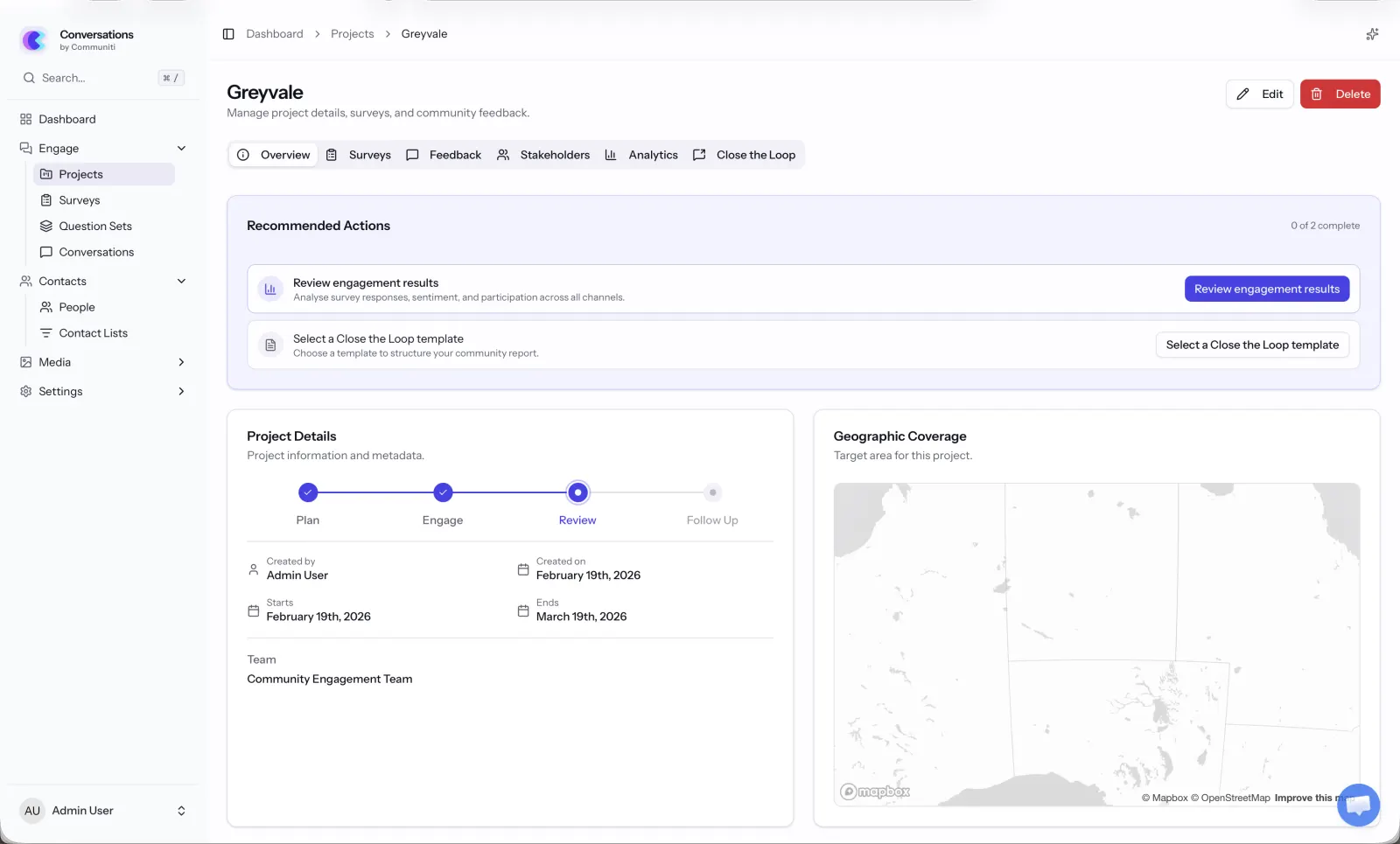
Increasing participation is not about chasing attention for its own sake. It is about making it easier for the right people to contribute in ways that feel clear, respectful, and worthwhile. Communiti Conversations is designed for that reality, helping teams plan multi-channel engagement, reduce friction, and keep participation connected all the way through to follow-up.